|
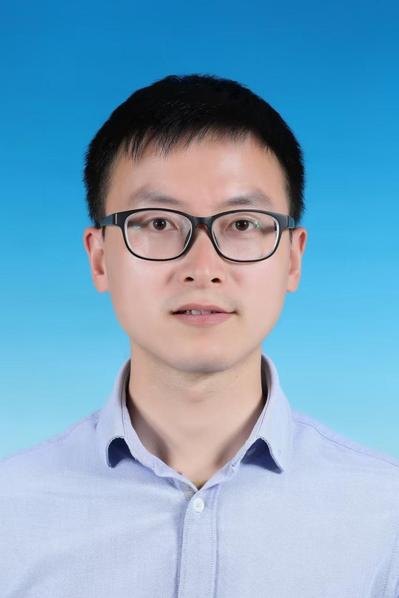
ShichangfengAssociate professor Subject: Teach Department: Office: Address: PostCode: |
|
|
|
10 Access |
ResumeShi Changfeng (1985-), male, from Yangzhou, Jiangsu, Ph.D., associate professor of Hohai University, secretary of the Gulf of Guinea-Côte d 'Ivoire National Research Center. His main research direction is resource management, and he has carried out low-carbon economy and artificial intelligence through the interdisciplinary integration of disciplines interdisciplinary research. Presided over one general project of the National Natural Science Foundation of China, one youth project of the National Natural Science Foundation of China, and one general project of the Jiangsu Provincial Social Science Fund, and participated in a number of national-level projects such as major projects of the National Social Science Foundation of China and general projects of the National Natural Science Foundation of China. In recent years, he has published more than 10 papers included in SCI/SSCI/CSSCI as the first author in authoritative journals at home and abroad, such as Journal of Geography, Journal of Natural Resources, Energy, Environmental Impact Asserent Review, Sustainable Production and Consumption, among which There are many papers in TOP journals in the first district of the Chinese Academy of Sciences, and one is an ESI highly cited paper (selection rate < 1%). About
Education Experiences(1) 2008.09-2013.06, Hohai University, Management Science and Engineering, Ph.D. (2) 2004.09-2008.06, Hohai University, International Economics and Trade, Bachelor WorkExperience(1) 2016.01-2022.08, Hohai University, Business School. (2) 2022.09-now, Hohai University, School of Economics and Finance. Field(1) The first is virtual water flow and resource benefit evaluation, comprehensively using cross-disciplines such as multi-regional input-output model, complex network and exponential stochastic graph model to deconstruct China's water shortage risk transfer network and its formation mechanism. (2) The second is the cross-integration of low-carbon economy and artificial intelligence. Facing the actual needs of energy structure transformation and regional carbon emission governance under the dual carbon strategy, deeply explore the application scenarios of artificial intelligence technology in the field of low-carbon economy, focusing on Core issues such as carbon emission prediction and emission reduction path simulation. (3) The third is the carbon footprint accounting and emission reduction plan of water conservancy and hydropower projects, exploring the in-depth empowerment of artificial intelligence technology in engineering carbon reduction, and devoting itself to the research of big data and artificial intelligence algorithms in carbon emission monitoring and management, and Optimize the carbon footprint accounting and carbon emission management of water conservancy and hydropower projects through intelligent means. ProjectStudy on Water Ecological Compensation Model Based on the Coupling Perspective of Physical Water Scheduling and Virtual Water Flow, National Natural Science Foundation of China. Thesis[1]Changfeng Shi,Jiaqi Zhi,Xiao Yao,Hong Zhang,Yue Yu,Qingshun Zeng,Luji Li,Yuxi Zhang.How can China achieve the 2030 carbon peak goal—a crossover analysis based on low-carbon economics and deep learning[J].Energy,2023,269:126776(SCI) [2]Changfeng Shi,Chen Wu,Jiaying Zhang,Chenjun Zhang,Qianqian Xiao.Impact of urban and rural food consumption on water demand in China—From the perspective of water footprint[J]. Sustainable Productionand Consumption,2022,34:148-162(SSCI) [3]Changfeng Shi;Yi Zhao,Chenjun Zhang,Qinghua Pang,Qiyong Chen,Ang Li.Research on the driving effect of production electricity consumption changes in the Yangtze River Economic Zone-Based on regional and industrial perspectives[J].Energy,2022,238(SCI) [4]Yue Yu,Changfeng Shi,Jiarui Guo,Qinghua Pang,Menghua Deng,Xiahong Na.To what extent can clean energy development advance the carbon peaking process of China[J]Journal of Cleaner Production, 2023: 137424(SCI) [5]Changfeng Shi,Qinghsun Zeng,Jiaqi Zhi,Xiaohong Na,Shufang Cheng.A study on the response of carbon emission rights price to energy price macroeconomy and weather conditions[J].ENVIRONMENTAL SCIENCE AND POLLUTION RESEARCH,2023,30(12):33833-33848(SCI) [6]Chiu. The Dynamic Analysis of the Pollutant Emissions Impact on Human Health in China Industries Based on the Meta-Frontier DEA[J].Healthcare, 2020,8(1)(SCI) [7]Changfeng Shi,Xinhui Liu,Min Gu,Qinghua Pang,Zhen Shi.Evaluation of the impact of energy utilization and PM on respiratory health in China[J].ENERGY & ENVIRONMENT,2021,32(3): 380-402(SSCI) [8]Changfeng Shi,Hang Yuan,Qinghua Pang,Yangyang Zhang.Research on the Decoupling of Water Resources Utilization and Agricultural Economic Development in Gansu Province from the Perspective of Water Footprint[J].INTERNATIONAL JOURNAL OF ENVIRONMENTAL RESEARCH AND PUBLIC HEALTH, 2020,17(16)(SSCI) [9]Changfeng Shi,Xinyun Zeng,Qianwen Yu,Junyuan Shen,Ang Li.Dynamic evaluation and spatiotemporal evolution of China's industrial water use efficiency considering undesirable output[J].ENVIRONMENTAL SCIENCE AND POLLUTION RESEARCH, 2021, 28(16): 20839-20853(SSCI) [10]Changfeng Shi,Luji Li,Yung-Ho Chiu,Qinghua Pang,Xinyun Zeng.Spatial differentiation of agricultural water resource utilization efficiency in the Yangtze River Economic Belt under changing environment[J].JOURNAL OF CLEANER PRODUCTION, 2022, 346(SCI) [11]Changfeng Shi,Yanying Wang,Chenjun Zhang,Lina Zhang.Spatial-Temporal Differences in Water Footprints of Grain Crops in Northwest China: LMDI Decomposition Analysis[J].Water, 2019,11(12)(SCI) [12]Changfeng Shi,Xufei Miao,Lina Zhang,Yung-Ho Chiu,Qingshun Zeng,Chenjun Zhang.Spatial patterns of industrial water efficiency and influencing factors —based on dynamic two- stage DDF recycling model and geographically weighted regression model[J].Journal of Cleaner Production, 2022, 374: 134028-134028(SCI) [13]Changfeng Shi,Yue Yu,Chenjun Zhang,Qiyong Chen.What drives carbon emissions reduction in Beijing?An empirical study based on SDA and SPD[J].Energy&Environment,2022,0958305X2211341(SSCI) [14]Changfeng Shi, Luji Li,Yung-Ho Chiu,Yanying Wang,Ang Li.Decoupling analysis of water consumption and economic development of arid and semiarid regions in Northwest China[J].NATURAL RESOURCES FORUM, 2023, 47(2): 192-213(SSCI) [15]Changfeng Shi,Teng Shang,Jiaqi Zhi,Xiaohong Na.Research on the impact of China's new urbanization on industrial water utilization efficiency - based on spatial spillover effects and threshold characteristics[J].WATER SCIENCE AND TECHNOLOGY,2023,87(8):1832-1852(SCI) AchievementsOpen Course1. Microeconomics; 2. Operation and Management of Commercial Banks; 3. Macroeconomics. Teaching achievementsTeaching resourcesSocial Position1. A director of Jiangsu Statistical Society; 2. A director of Jiangsu Urban Economics Association; 3. A reviewer for journals such as Journal of Geography, Applied Energy, Humanities and Social Sciences Communications, Energy, and Environmental Impact Asserent Review. HonorAdmissions |